Email: info@unisons.pro

Telephone: (514) 570-4846

171, Bella
Saint-Jean-sur-Richelieu
(Québec) Canada
J2X 4Y6

Did you know?

Google search results may reveal a lot about your favorite music guy but they can’t possibly tell you everything.

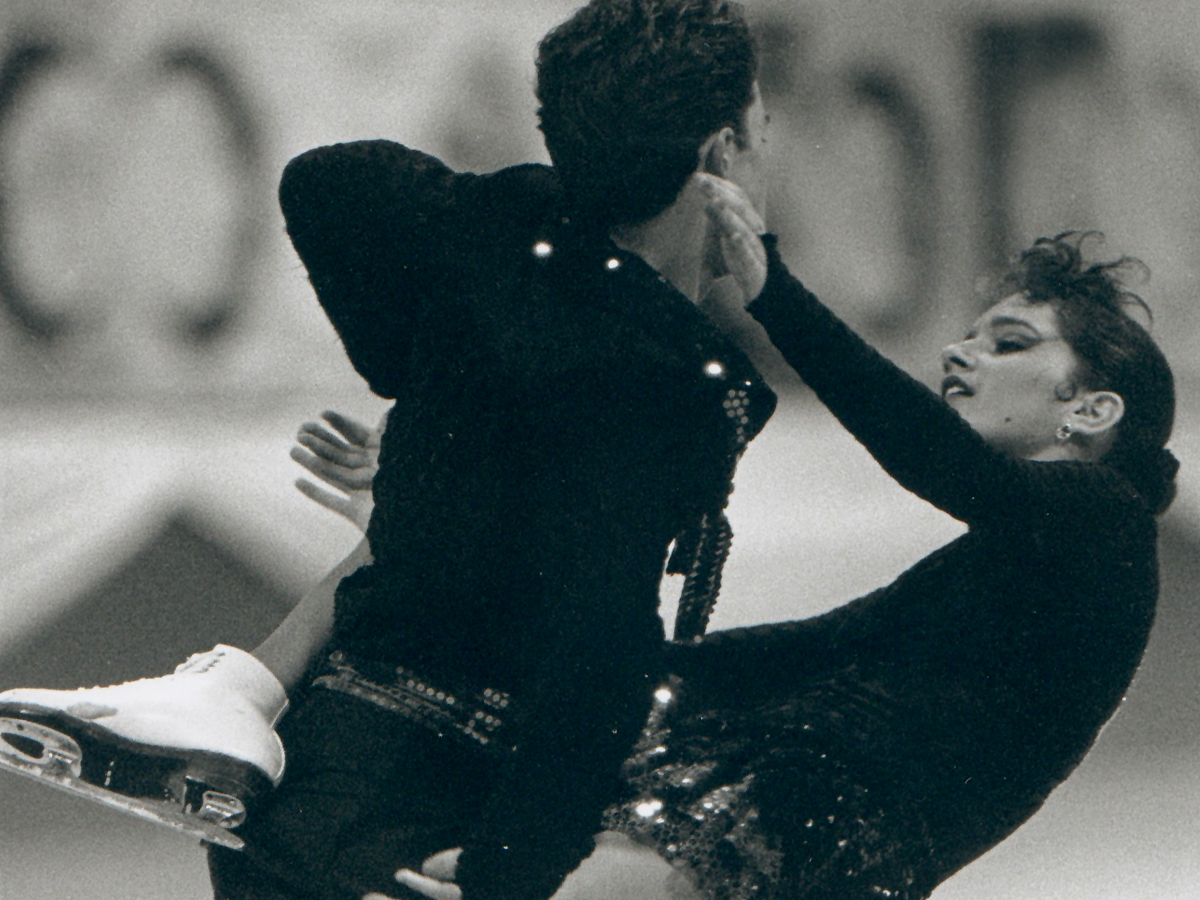
My knowledge of him is quite unique. We play important roles in each other’s careers, from when we were elite athletes to our professional lives today. I’m Elizabeth Hollett Shackett and I skated with the founder of Studio Unisons a.k.a. Sk8mix, Hugo Chouinard.

We first met in Boucherville, Québec in post-Olympic 1988. We were training with different partners in ice dance. Québec in the nineties was surging with elite skaters in suburban Montréal and we were part of it.

Our partnership was unexpected because I had quit skating and moved back to my hometown of Hawkesbury, Ontario. This after fruitless partner tryouts around Canada, some interest from the U.S. followed by a short partnership that left emotional wounds after my other half quit skating at 6:30am on my 16th birthday. Hugo’s former partnership amicably ended and he was in pursuit of a new path. Friend and fellow skater, Bruno Marcotte, convinced him to connect with me for a tryout. We formed our partnership in late spring of 1991.

We spent two intense months after pairing up preparing for our first competition, the World Junior Team selection event. Given our National level experience with former partners, we knew how to sharpen our focus to merit wearing the coveted maple leaf and represent Canada. We quickly rose to the International stage by placing 2nd in the Team selection. Only one berth was open to Junior Worlds that season so we were named team Alternates but assigned a Junior Grand Prix competition in Germany where we medaled. That was only 5 months into our partnership. We were launched!


Pokal der Blauen Schwerter Chemnitz GERMANY 1991

We made the 1993 Junior World Team the following season, competed more internationally and had a podium finish at Canadian National Championships. We also won the Bull Computers Future Stars Award for best performance in ice dancing at Nationals. Junior skaters weren’t “supposed” to win that accolade.


National Championships Hamilton CANADA 1993

Known for our passion for music and collaborative work ethic, we just “clicked.” We surrounded ourselves with an equally passionate support team consisting of Canadian Hall of Fame coaches Josée Picard and Eric Gillies, choreographers like Uschi Keszler, Jean-Marc Généreux, Julie Marcotte, and Paul Duchesnay. We dabbled outside the 90’s ice dance box working with Hugo’s childhood coach, David Wilson, who was just starting to make a name for himself as a choreographer then.


Echos Vedette Montréal French Newspaper 1991

Like most elite athletes, we cherished our individual outlets to the daily grind. Hugo’s unknowingly planted his roots to music design back then. He began editing our programs because the best service in town was typically on back order. He was definitely into buying the newest technology more than the after-training hours we spent listening to music and negotiating what to use. For me, I found escape in creativity. I kept a writing journal in both French and English and loved to choreograph programs for other skaters.


The Studio 1996

We parted ways with our own elite skating but didn’t stray far from design, creativity, language, and of course, figure skating. Hugo spent 15 years coaching ice dance and partnering skaters. He also spent 4 years coaching and choreographing synchronized skating while completing a University Degree in Industrial Design. As for me, it’s been 20+ years that I coach and choreograph grassroots to elite skaters in singles, pairs and dance in suburban Philadelphia and in Delaware. While we live in different countries, we are still a team… several years ago; Hugo called on me to translate his bustling online music design service website from French to English giving it a global boost. Did I mention I also do freelance translation work? We have been collaborating now for 27 years!

Hugo and I are both married and each have a single child. Their fathers’ love of music influence their lives. His son, Olivier Chouinard, is a budding pianist. My daughter, Meryl Shackett, plays drums. My husband plays in a rock band called DeadSight besides being a Mechanical Engineer. Both kids have set foot on the ice. Olivier has tried speed skating. Meryl currently skates pairs with Matthew Kennedy striving to make Team USA. Can you guess who their music designer is?

Oh and one last scoop… Hugo’s real name is Pierre-Hugues 😉

Written by Elizabeth Hollett Shackett Creativeskating.com

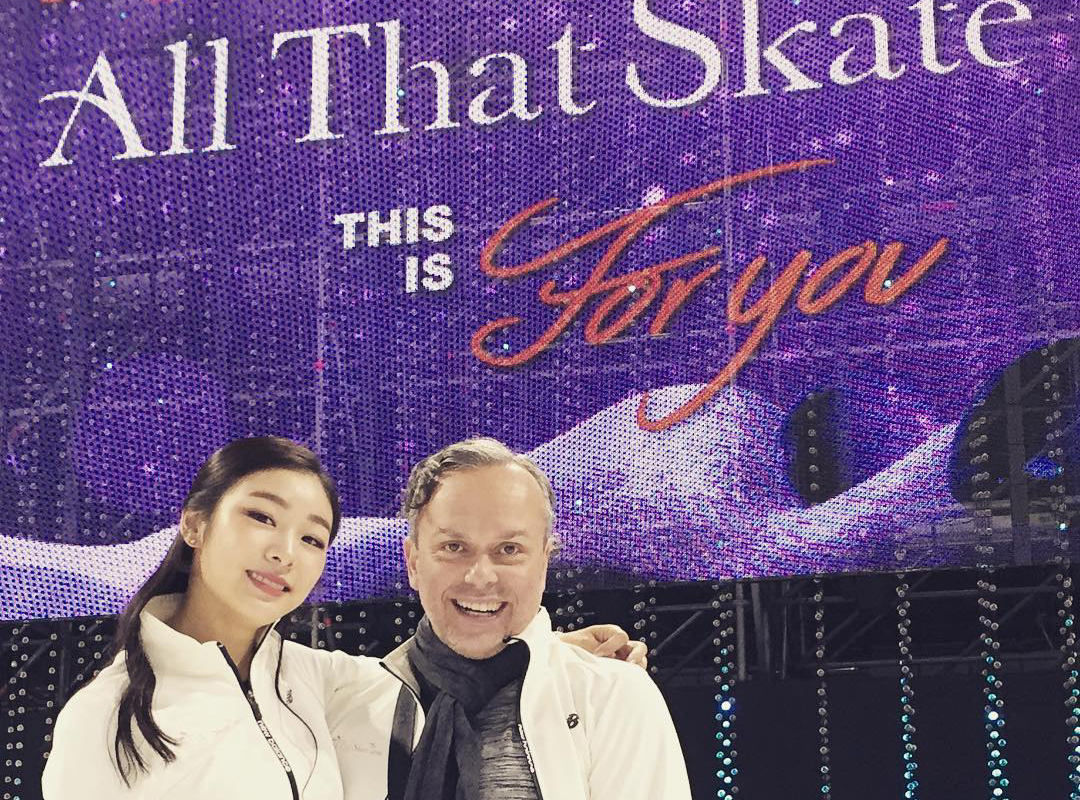
All That Skate 2018

Exciting collaboration with David Wilson on the 2018 Gala soundtrack design. A fantastic journey that began in 2006 when we created our first program for Yuna, The Lark Ascending.

Through the years, Hugo and David developed several other concepts for her such as The Bond Girl, Danse Macabre, Die Fledermaus, Scheherazade, Piano Concerto in F, Giselle, Adios Nonino, Les Misérables and many more.

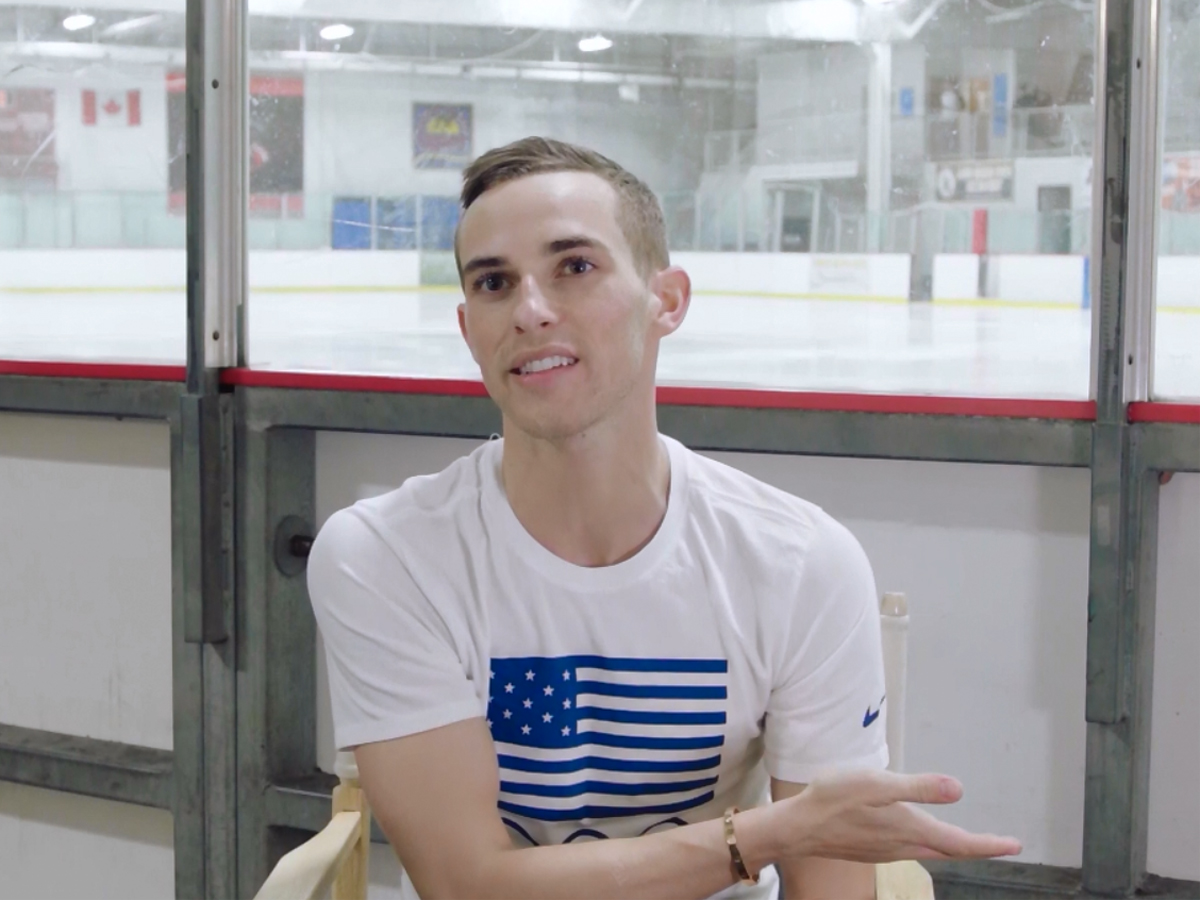
How Adam Rippon chooses his music

Figure skating music, explained

By 

During the 2018 Winter Olympics in Pyeongchang, South Korea, Adam Rippon skated to Ida Corr’s “Let Me Think About It” for his short program. It was fun, powerful, and most of all, different. This is the first Olympic Games at which figure skaters have infinite creative freedom with their music, as they now can skate to music with lyrics.

Figure skating was not always woven in with music and artistry — it was very much a technical sport. The skaters had to literally carve figures into ice. As figure skating evolved, it leaned more toward performance. For decades, figure skaters skated to the classics like “Swan Lake” and “Carmen.” They chose these pieces not only because it’s great music but because of the clear storyline and the quality of the characters in them. With operas, in particular, it is easy to take the audience on an emotional journey.

Hugo Chouinard, a music designer who mainly works with figure skaters, says, “The most important is that the skaters like the music. Because if they don’t like the music, they don’t feel the music; there’s no emotion to convey to the public.”

And that is what Adam Rippon did for his musical choices for the Olympics. During the interview, he said:

I like to have two different moods for the programs, just so that I can show that I can skate to anything … that I can interpret whatever piece of music. So for [a] short program, I want to do something that is really upbeat, that would get the crowd on their feet — everybody clapping. Short programs are only two minutes and 50 seconds, so you have not a lot of time to make a big impression.

And then in free skate, I wanted to show the softer side and I want to show off my lyrical skating style … something with long, sweeping edges and something that really made it seem like I was flying around the rink. I’m 28 and I’m going to my first Olympics; I’m going to skate to something that I really want to do. I wanted to really represent who I was. And I’m a fun-loving guy, so I just wanted to bring that to the competition.


Link to the article

Putting Their Mark on Olympic Skaters’ Music

Behind the Music of 49 Olympic Figure Skaters in Pyeongchang.

They are the music origin for the boundary-breaking North Koreans skating to the distinct voice of Ginette Reno in Pyeongchang. Behind Tessa Virtue and Scott Moir’s World Record. Music designer, Hugo Chouinard, put his mark on the music of 49 Olympic skaters’ programs along with composer, Karl Hugo, who collaborated on most projects.

The adventure started 25 years ago. At first on their own, but destiny soon brought these men together. Hugo Chouinard, a St-Jean native, is at the helm of Studio Unisons a.k.a. Sk8mix where he creates about 2000 audio mixes annually for figure skaters and artistic swimmers.

His work consists of adapting a song reaching both Olympic and artistic direction demands. “I create the canvas” explains Chouinard who was once a National Team figure skater himself. “The coaches and choreographers give me their ideas and concepts. Sometimes they have their music, other times they only have a theme and don’t know what music to choose.”

Concept

They develop a concept together then, conduct experiments alongside the coaches and choreographers playing with the set up and structure of the program. Chouinard explains that with the new judging system in figure skating, there’s a symbiosis between the music and the skater’s technical requirements. Plus it can bring higher scores.

“We organize our choices in such a way that music sections match the elements, spin, step sequence, etc.,” Chouinard explains. Interestingly, Hugo Chouinard often works with one of his own choreographers from his heyday, Julie Marcotte. “We then have to adjust the whole to the time length of each element…How long is the step sequence? It’s all counted to the nearest second. At the Olympic level. We play with seconds and half seconds.”

Composition

Many of the creations at Studio Unisons, need the intervention of composer, Karl Hugo. Starting out with the likes of Isabelle Brasseur and Lloyd Eisler in the 90’s, he can very well add some instrumental music, a rhythm, or modify beginnings and endings.

His work is done at three different levels whether it’s composition, adaptation, or adding orchestrations and arrangements. “Music should have distinguishable pulsing so the judges can count it,” explains the musician. “I often add choruses, symphonic orchestrations, for example, in an a capella song or add a punch to an ending. All this adds to the theatrics.”

For instance, Canadian pair team Meagan Duhamel and Eric Radford chose Adele’s song ‘Hometown Glory.’ The crux of the piece was notably modified by adding two string orchestrations giving it a breath of fresh air.

Constraints

There is obviously a tight frame of music for the athletes to work in. But priority is to adapt to their mentality and personality. “After that, it becomes mathematics. They’re music equations to fit within time limits, certain elements happen at certain places so the whole remains esthetic.”

There are rule constraints and from the athlete as well. He continues, citing the example of endurance varying at certain skating levels over the span of a career. Other times, restrictions can be about adjusting to the order of emotions that skater feels within the program.

In the case of the North Koreans, Hugo Chouinard proposed the work of Ginette Reno so as not to conflict with any regional values, morals or politics. The lyrics were inspected with a fine tooth comb by the athletes’ support system who were very happy with his choice.

Clients

Their clientele is worldwide. So much that Hugo Chouinard’s studio is adjacent to his home so he can meet the demands that can come at all hours of the day considering time differences and occasional tight deadlines.

“We are constantly in survival mode,” admits Karl Hugo who works independently from his own studio lab. “They can change everything one week before a big competition. I have to then modify or recompose quickly. We are at the service of the athletes.”

Especially during an Olympic year. Hugo Chouinard works with world class teams ever since he collaborated with Olympic medalist, Jeffrey Buttle in 2004.

Illustration(s) :

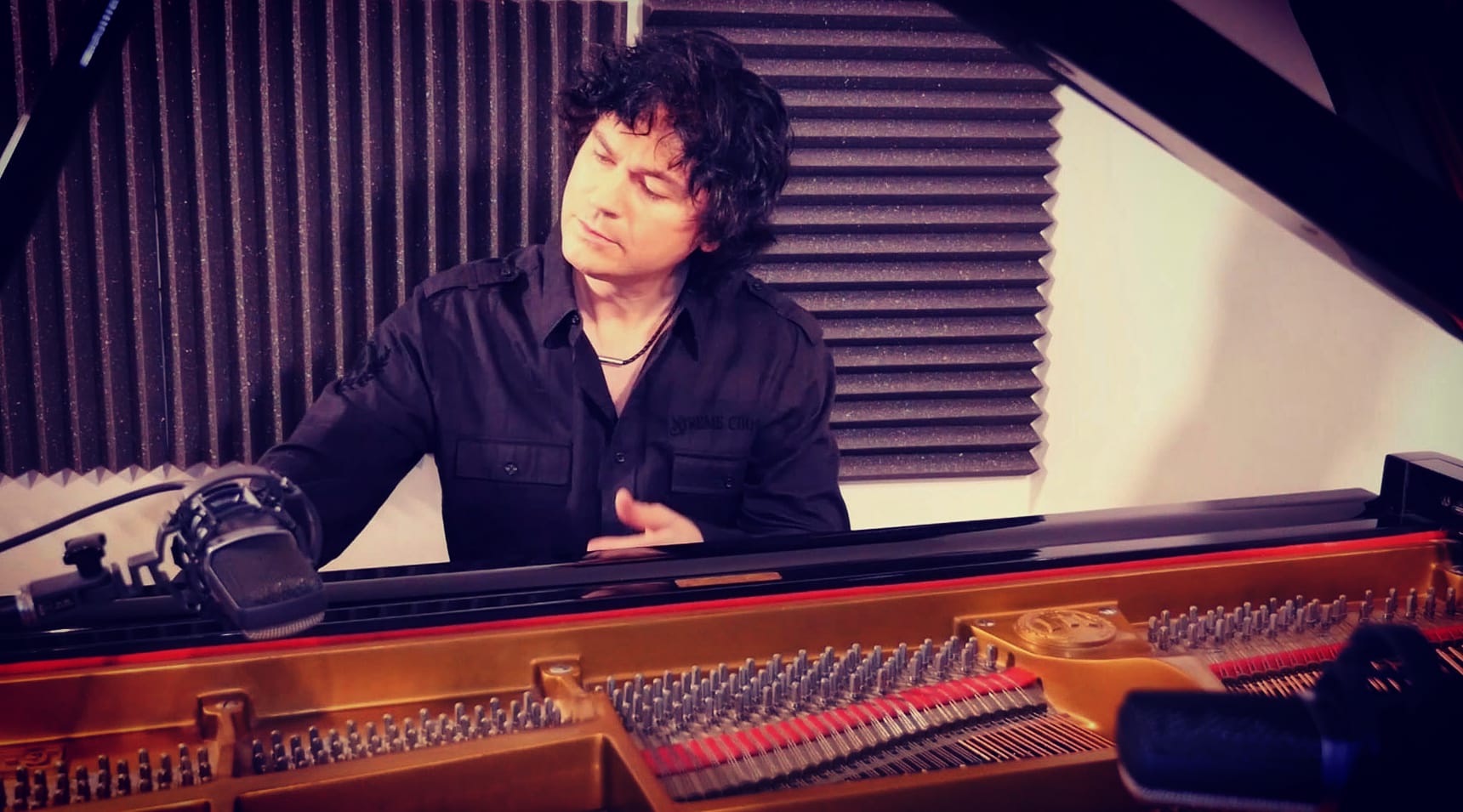
The Musical Designer Hugo Chouinard and the composer Karl Hugo collaborate since 1993.

(Photo Le Canada Français, Kim Valiquette)

© 2018, Isabelle Laramée, Le Canada Français. All Rights Reserved.

The Musician for Figure Skaters and Artistic Swimmers

Karl Hugo began playing and composing on the piano as a child, creating his first concerto when he was barely a teenager. During this period, he had an epiphany while watching the movie Ice Castles: he would spend the rest of his life composing music for figure skating! In 1992, his dream came true with the release of his first piano album. He then met Ice Capades star Julie Brault with whom he filmed Broadway, an ambitious video combining piano and figure skating.

Inspired by Karl’s passion for figure skating and his grandiose musical style, Olympic champions Isabelle Brasseur & Lloyd Eisler asked him to compose and perform original music live for their television production Dreams on Ice, an annual fundraising event broadcast on more than forty television stations for many years. This unique experience afforded Karl the pleasure of watching great figure skaters the likes of Ekaterina GordeevaNancy KerriganScott HamiltonBrian OrserYuka Sato, Elvis Stojiko and Kristi Yamaguchi grow and develop to the sound of his music.

It was during this period that Karl Hugo began collaborating with Hugo Chouinard of Studio Unisons (sk8mix), musical designer specializing in figure skating, synchronized swimming and dancing. This fruitful 27-year partnership has never stopped renewing itself with the seasons of sport and new generations of athletes.


Karl Hugo’s recent music video featuring Shiyue Wang & Xinyu Liu and singer Junshu Zheng

After coming to the attention of IMG in New York, Karl Hugo was invited to play his compositions at professional ice-skating shows such as Champions on Ice and Skate the Dream, always accompanied by his transparent Kawai piano. He also wrote music for ice dancers such as Isabelle & Paul DuchesnayIsabelle Delobel & Olivier Schoenfelder and Marie-France Dubreuil & Patrice Lauzon.

With his experience, he then offers his services to new generations of figure skaters and synchronized swimmers, athletes and teams such as Miki AndoPatrick ChanThe HaydenettesMadison Hubbell & Zachary DonohueHong Chen & Yan ZhaoMarigol IceUnityGracie GoldYuzuru HanyuSara Hurtado & Adrian DiazCathy Reed & Chris ReedAdam RiponJoannie RochetteThe RockettesJulianne Séguin & Charlie Bilodeau, Les SuprêmesSynchro Brazil, Synchro Canada and Kim Yu-na.

At the 2018 Winter Olympics, Karl Hugo lent his talents as a composer, arranger, orchestrator and performer to a number of figure skaters including Anna Cappellini & Luca Lanotte (Italy), Meagan Duhamel & Eric Radford (Canada), Piper Gilles & Paul Poirier (Canada), Marie-Jade Lauriault & Romain Le Gac (France), Kavita Lorenz & Joti Polizoakis (Germany), Kaetlyn Osmond (Canada), Gabriella Papadakis & Guillaume Cizeron (France), Ryom Tae-ok & Kim Ju-sik (North Korea), Denis Ten (Kazakhstan), Bradie Tennell (USA), Tessa Virtue & Scott Moir (Canada), Shiyue Wang & Xinyu Liu (China) and Kaitlyn Weaver & Andrew Poje (Canada).


Karl Hugo pays tribute to figure skaters at the Pyeongchang Olympic Winter Games

Although due to the COVID-19 pandemic the 2020 World Figure Skating Championships were unfortunately canceled, Karl Hugo still lent his musical talents to the following selected figure skaters: Jin Boyang (China), Daniel Grassl (Italy), Shoma Uno (Japon), Alicia Pineault (Canada), Maé-Bérénice Méité (France), Bradie Tennell (USA), Holly Harris & Jason Chan (Australia), Laurence Fournier-Beaudry & Nikolaj Sørensen (Canada), Marjorie Lajoie & Zachary Lagha (Canada), Gabriella Papadakis & Guillaume Cizeron (France), Marie-Jade Lauriault & Romain Le Gac (France), Lilah Fear & Lewis Gibson (Great Britain), Misato Komatsubara & Tim Koleto (Japon), Kaitlin Hawayek & Jean-Luc Baker (USA), Madison Hubbell & Zachary Donohue (USA), Madison Chock & Evan Bates (USA) and Tiffany Zahorski & Jonathan Guerreiro (Russia). Note that the music of all programs for the Worlds would have been the same as that heard in the 2019-2020 season.

Returning to his solo career, Karl Hugo launched back to back Blue Sparkles and Red Sparkle albums in which he performed 24 of his original compositions on the piano accompanied by an orchestra. Karl’s vast musical repertoire is aired in over one hundred countries around the world on prestigious TV networks such as ABCBBC OneCBCDisney ChannelDisney Channel AsiaFox JapanIndosiarMediaCorp Channels 5 & 8TelemundoTVATF1 and Zee Café India.


Olympic Artistic Swimming

Breathless!Fire and Ice

The silent and frozen calm of winter –Ice cracks like thunder under our feet

In the distance, the glow of a small fire promises warmth

Hearts pound as we race toward the flames…

And relief from the frigid North!


Canada’s free team routine, Fire & Ice, is an innovative departure from previous ones – taking as its inspiration something very personal to the athletes – being Canadian.

With its frosty and blazing musical depiction of winter in the North, it examines the contrast between the harshness of the weather in the Canadian North with the warmth of the spirit of the Canadian people.

The development of the free routine underwent the same three steps as the technical routine, to analyze the competition, strategize on findings of the performance analysis and synthesize the key learnings into a stronger end result.

As part of the strategy, exciting and difficult acrobatic highlights have been built into the storyline. The first highlight sees the flames (flyer) exploding out of the water, tumbling twice forward and diving into the water. Another sees flames climbing the ice mountain and reaching out longingly from the frozen land into the open sky, while a third highlight shows the fire rising through a crack in the ice and vaulting over to other side, heating those around it on its way.

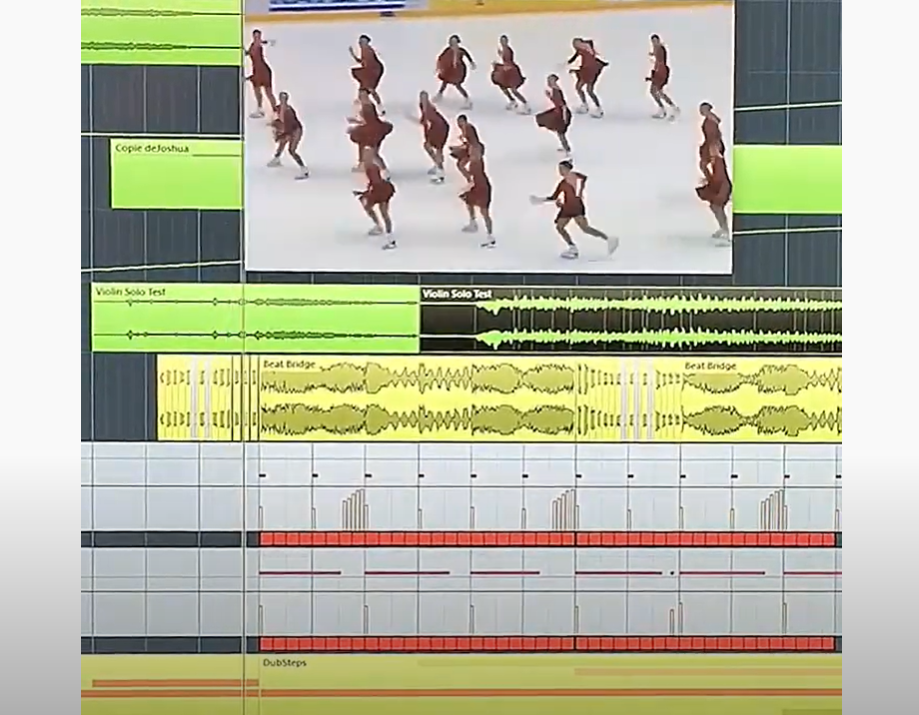
Technically the routine is superior.  Based on the scientific analysis of the top teams at the 2015 World Championships, this program pushes the limits of the aspects of performance measured and quantified following Kazan. Artistically, it is a sophisticated performance. Blending music composed especially for the routine, Team Canada’s music designer Hugo Chouinard added in additional music tracks, variations and sound effects to create musical magic. To perfectly synchronize the music, members of the team performed the routine dryland in the music studio to allow for the precise beat of music to be on an exact hand, arm, leg or acrobatic movement.

Once the teams had the story line, music and elements created, there was lots of work ahead. They were conscious that to be synchronized in the water, their fitness had to be at the same level across all team members. The teams worked with a strength and conditioning coach to improve their already high fitness levels, and to give them additional height out of the water on their movements. Other experts in nutrition, planning, physiotherapy, and gymnastics came alongside to work on specific areas with the team.

“There is so much to talk about in this routine. It is an extremely difficult, physically challenging number. Hypoxia, technical skill execution, creative movements, dynamic highlights, all make for a presentation that is super charged emotionally” says Head Coach Meng Chen. “I believe everyone will enjoy the Canadian passion in the routine, feel the connection, and love each meaningful action and hybrid.  In Canada, we are living it!”


SOURCE HERE

Podcast Episode 1
by Pj Kwong

Inside Edge

When I was trying to come up with who would be a terrific first official guest for the @skatingPj Podcast, I thought of this man. All the tricks are important in skating, but they are nothing without an inspired musical backdrop. Hugo Chouinard is someone that I have known for a very long time and respect tremendously. Hugo’s professional life is music in general with a huge chunk of it being devoted to editing and creating the music for skaters. I am not saying that it didn’t take some persuading, because it did; Hugo is a very self-effacing and humble man who was not sure at all that he wanted to be interviewed. Thankfully, he finally said yes.

Our conversation wanders all over skating from Hugo’s own competitive career as an ice dancer to when he was first asked to put together music for a skater’s program. The list of choreographers reads like a who’s who of contemporary skating from David Wilson, Julie Marcotte, Jeff Buttle, Marie-France Dubreuil, Patrice Lauzon, Romain Haguenauer and that’s just the list in Canada – there are of course many more.

We talk about 2010 Olympic Champion Yu-Na Kim’s music. We explore the way that Hugo recently added four seconds to Patrick Chan’s music in order to make Chan more comfortable in his short program. He admits to not being able to do all of this alone and that his collaboration with composer and musician Karl Hugo has been invaluable.

As with everything else in skating – it’s all about the relationships. This is a fascinating podcast with Hugo Chouinard.

Listen to the Podcast


Creating Programs
by Vladislav Luchianov

Chouinard talks music

Canadian specialist believes figure skating is great musical school.
The name Hugo Chouinard is well known among skaters, coaches and choreographers. The focus of his work is an integral and important part of figure skating: the music. Musical design is not just a job for Chouinard; it is a real passion, one through which he has completely devoted himself to the sport of figure skating.A former ice dancing competitor for Canada, he founded the company Studio Unisons (aka Sk8Mix) in 1994. Chouinard began his business in a small room in his house and with simple musical equipment. Thanks to his dedication and perseverance, his company is now one of the leaders in its field, using all the latest musical design technologies.

This passion, combined with knowledge and constant self-development, have brought big results. His client list includes such well-known skaters as Yu-Na KimTessa Virtue and Scott MoirDaisuke TakahashiJeremy Abbott and many more.

No less impressive is the list of choreographers and coaches working with Hugo.

“From the search through the editing process, Hugo is a gifted professional, and his flair for artistry shines as an invaluable part of the creative process for my work,” choreographer David Wilson said.

“Hugo is brilliant! I’m most impressed with his passion for music and his creative mind,” coach and choreographer Shae-Lynn Bourne said. “He takes on every project with enthusiasm and turns the music he touches into a masterpiece.”

Icenetwork.com talked with Chouinard about his work, his thoughts on this past season and his vision for the future of music in skating.

Icenetwork.com: You always try to come up with original and unique concepts to push the limits of figure skating. Were you able to do that during this past season?

Chouinard: Every skater builds his season and strategy on the originality of the concept, so it’s essential to make the right decision. The research process is always collaboration and brainstorming sessions between the choreographers, coaches, skaters and me. Each project is different and unique, but the most important factor is to find a concept to maximize the skater’s potential. There were many original creations last season…here are a few:

  • Kaitlin Weaver and Andrew Poje‘s free dance to “Je Suis Malade,” where, with my partner Karl-Hugo, we composed half of the structure.
  • Takahashi’s short program, with a very introspective ambiance created by overlapping selections from several Middle Eastern percussions cuts with mysterious world fusion melody.
  • Tessa and Scott’s Funny Face free dance, with the challenge of putting a movie story on ice.
  • Narumi Takahashi and Mervin Tran‘s free skate using the very unknown classical masterpiece “Concerto de Québec,” composed in 1943 by André Mathieu, who was known as the “little Quebecer Mozart” and whom Rachmaninoff called “a genius, more so than I am.”


Icenetwork.com: Which performances of your musical works were the most successful this season and why?

Chouinard: I follow with pleasure and attention all the performances during the season, and I love to see what competitors have created on my musical design. This is truly my greatest reward. I can’t comment on specific performances, as they all compete against each other and I respect everyone’s hard work. I also apply a firm policy of professional secrecy, which is fundamental, especially during the creation process.I can highlight a recent program that I have created for the Canadian Olympic synchro [swimming] team. In this very unique project, we first created a frame for drafting the choreography and then, after producing over 30 versions, adding and adjusting hundreds of sound effects to match every move of the structure and highlights.

Icenetwork.com: Our correspondent, Sarah S. Brannen, recently talked with several skaters about musical theme. Most of them said that they constantly listen to music and think about using their most-liked pieces in their future programs. How do you combine preferences of skaters with the coach’s point of view and the choreographer’s vision, if they are different?

Chouinard: It must always be based on a fun and respectful relationship, where each idea is welcome, thus reaching the ultimate decision. In general, there is a discussion between the skater, the coach and the choreographer about the direction to take. The most important factor in building great performances is the close involvement of the skater in the selection process. When you perform, you must feel the music in your soul. It’s impossible for the skaters to let the music come out if it doesn’t come in.If they haven’t found the right music tracks to fit their concept, they contact me for suggestions, and sometimes the first idea totally changes along the search process. If there are divergent points of view between the skater and coaching team about the selection or structure, I start some editing experimentation to really demonstrate how it will sound, so everyone can hear and make the right decision. Even if some ideas could seem strange or totally impossible, once mixed, we generally have great surprises. At the international level, experimentation is crucial to come up with unique concepts. I love to be involved in the brainstorming process, as I constantly learn from others’ visions. There is no one truth, as the possibilities are infinite. You can only relate on your feelings.

Icenetwork.com: The ISU made the decision to allow hip-hop music in junior ice dancing. Some experts think that music must educate and not just entertain. This is especially true of young athletes, whose world view is just beginning to emerge. What is your opinion on this issue? Is it possible to be liberal and conservative at the same time?

Chouinard: Figure skating is a great musical school for the athletes. They listen and learn about a wide variety of musical styles they would never hear on the radio. I think the coach has an important responsibility in the skater development by creating opportunities to experiment body expression with different styles, especially when they are younger.I particularly like instrumental music as it gives a universal dimension to a performance which creates a symbiosis of sound and movement. I support the ISU in its trial to experiment with new ideas to promote our sport and to encourage skaters to exploit more audacious styles. Hip hop is much more than the cliché of urban music containing explicit lyrics, and I’m sure skaters will make judicious choices to select suitable tracks for skating. Some hip-hop artists are true poets, and this genre has developed exponentially since the 1970s. As the ISU offers the choice to use it or not, I’m very much looking forward to see how popular it will be this season and how it will be transposed into movement on the ice.

Icenetwork.com: You use a very unique approach with each skater, even if the work on the music takes additional time. Because of that, can you work just as well with classical and instrumental music as you can with pop or rock pieces?

Chouinard: I have listened to all kinds of music since I was young…blame my parents for that! I adapt my working method and select the tools to fit the music style. When I remix pop or techno music, I use the most recent electro effects and processors to enhance the transitions. For classical, it’s much more subtle, and every additional effect must come from real orchestra samples. My work is well done if you can’t hear it!Icenetwork.com: It seems like if I came to Studio Unisons, there will be a kilometer-long queue, as you have many clients among skaters. With such a huge amount of creative work, how do you manage your time without losing its quality?

Chouinard: Quality in every detail is my leitmotif, and it’s not just with the music. Service, website, CD design — each aspect is important. I don’t allow myself to work with low-quality files, and I find it very sad that people are using music downloaded directly from YouTube. I will say it one more time: Music from YouTube doesn’t have an acceptable resolution for skating use.I could not and would never deliver a program I’m not proud of. It’s against my nature. I’d rather take one extra day to make it perfect…

Sometimes people ask me, “Why don’t you hire someone else to edit music with you?” My reply is, “Would a choreographer hire someone else to make his creations?” It’s much more than just cutting a song to a specific duration; it’s about designing a canvas from where the story will take place in a way the musical transitions will not interfere with the overall flow.

Icenetwork.com: Last year you were at Yu-Na Kim’s “All That Skate” ice show in Seoul, Korea. Have you continued to work with Yu-Na?

Chouinard: Absolutely. In collaboration with David Wilson and “All That Skate,” we elaborate the concepts and prepare the show soundtracks. “ATS Spring 2012” just ended, and once again was a major success. It’s always very stimulating to work for them, as the energy put in the production refinement is huge, and you must see how Korean graphic artists literally choreograph their visual animation to match the soundtrack.

Icenetwork.com: In your opinion, which direction do you see the music in figure skating likely going and what will its role be?

Chouinard: The IJS has totally changed the way I work. The use of music phrases and subtleties has become a crucial factor in choreography evaluation by the judges. The interpretation of nuances and sensibility is now well rewarded, and this has forced skaters to maximize their relation with the music. Each second of a program is used and planned with the goal of winning in mind, and obviously the musical structure must be adapted to fit the movements perfectly. Skating is really becoming a full five-dimensional experience, with the IJS’s emphasis on 3-D spatial movement, which is increased by the use of multiple body levels, in conjunction with the music variations, speed and glide.

Now, with the infinite online resources, everyone has the possibility to browse and discover new music streams, and this is already reflected on the ice. Athletes are experimenting with new styles and daring to push the limits above the traditional boundaries, especially in the men’s and pairs events. The door is wide open in dance, and they use it very well. The ladies are still a little shy, but with concepts like Yu-Na’s “Bond” girl or Alena Leonova‘s Pirates of the Caribbean, this might push the skaters to take risks with surprising and less conservative programs. I truly love classical music, and it will always be a fantastic vehicle for choreography, but we also need to push the limits over and over.

I love our sport, as it’s a source of unlimited creation which will forever entertain the fans with amazing surprises.