Email: info@unisons.pro

Telephone: (514) 570-4846

171, Bella
Saint-Jean-sur-Richelieu
(Québec) Canada
J2X 4Y6

Making Music
by Melanie Hoyt

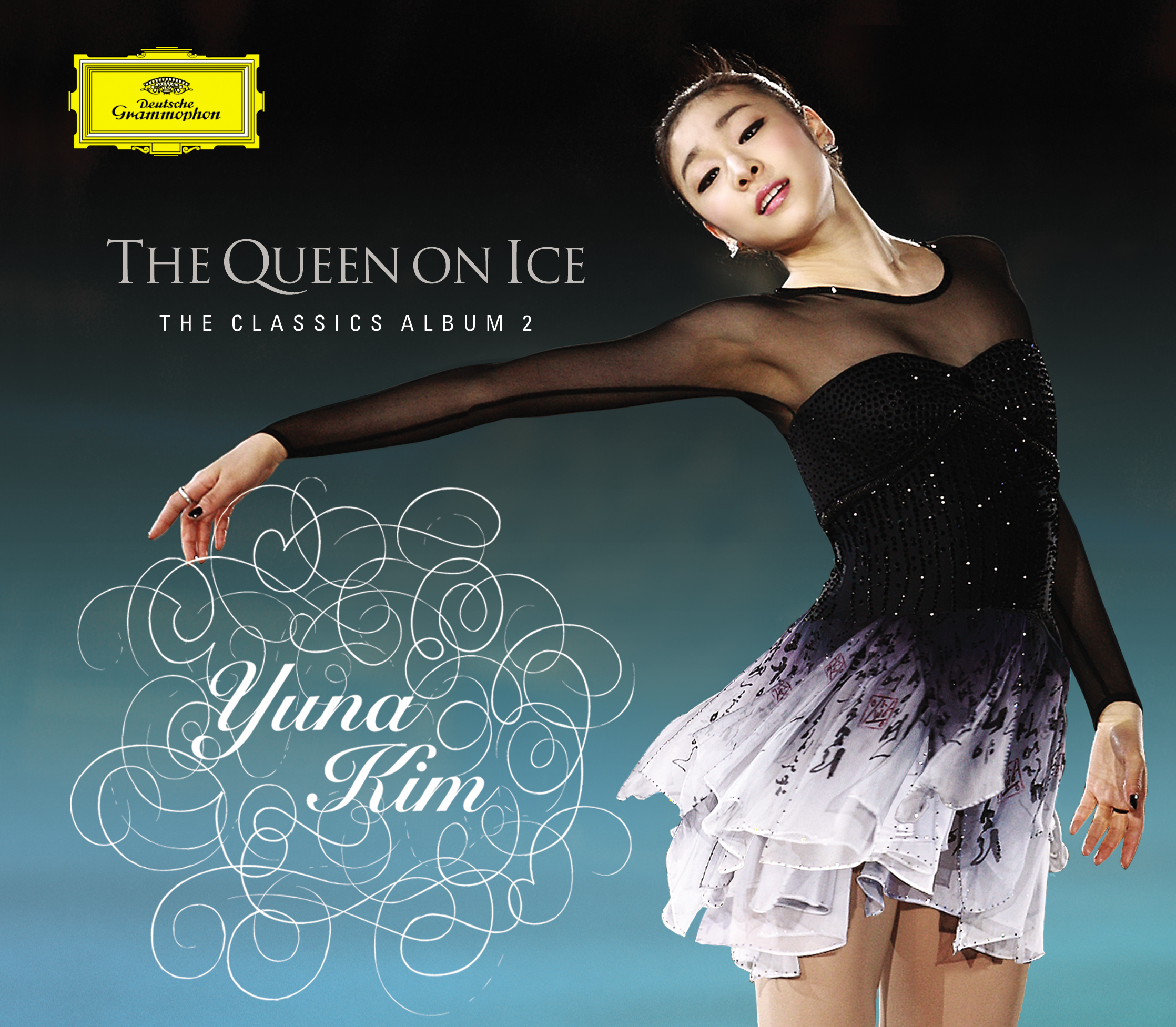
YUNA KIM HAS PREVIOUSLY lent her voice to several popular songs in her South Korean homeland, but her first connection to a complete album comes from an unexpected genre, “The Queen on Ice,” which was released in August, is a classical collection featuring the actual music Kim has performed to in international competitions over the years.

While Kim is the cover girl on this two-disc CD compilation and will most certainly be the catalyst for album sales, the guys behind the music are David Wilson and Hugo Chouinard.

Wilson’s choreography has figured significantly in Kim’s performances over the past five years, and he is well known to skating fans all over the world.

While Chouinard‘s name may be less recognizable, his work is even more widespread than that of his counterpart. Chouinard has mixed custom music through his company Studio Unisons for many of the world’s top skaters, including Kim, Daisuke Takahashi, Tessa Virtue and Scott Moir, Brian Joubert, Johnny Weir and many, many others.

Chouinard‘s natural ear for music, Wilson’s choreography and Kim’s artistry have melded together to create some of skating’s most memorable programs, the music of which is captured on this CD set.

This marks the first time a compilation of skating program music is available for purchase by the general public. No doubt judges should likely prepare themselves for many of Kim’s programs to reappear in the coming years.

“This album contains eight creations that David and I designed for Yuna,” Chouinard explained. “We worked together on musical research and structural experimentation to create a perfect fit with the choreography and, most of all, to highlight Yuna’s amazing skills.”

The first CD highlights eight pieces of Kim’s most memorable and unique work, from her breakout season’s “The Lark Ascending” to last year’s “Homage to Korea.”

The second disc contains 10 pieces that Kim recommends, including familiar melodies like Gershwin’s “Summertime,” but it also features more unusual tracks such as the “Adagio” from Marcello’s “Oboe Concerto in D-minor.”

“Each piece that David and l have created for Yuna has been an exciting journey” Chouinard said. “We share a common desire to create unique compositions. We are very proud that this opportunity was made possible by the visionary flair of Universal Music Korea in collaboration with All That Sports.”


“The Queen on Ice” is available at Korean music outlets and at Amazon Japan (Amazon.co.jp)

Skate to a music that grabs your heart!
by Vladislav Luchianov

Hugo Chouinard is a former Canadian National team member in ice dancing. Since 1994 he works in a musical design for sporting competitions, especially for figure skating. Thanks to his talent and genuine passion for figure skating his musical works appreciated by many famous figure skaters, coaches, and choreographers around the world. Over the years he has worked with such renowned skaters as Yu-Na Kim, Qing Pang/Jian Tong, Joannie Rochette, Miki Ando, Akiko Suzuki, Jeremy Abbott, Alissa Czisny, Jessica Dube/Bryce Davison, Sasha Cohen, Jeffrey Buttle and many more. By results of his clients we can confidently say that his musical design is the work which helps to create great Champions. Today I have an opportunity to talk with Hugo and ask him some questions.

VLAD: Hugo, you are a famous musical designer. How do you make your music? How do you find it?

HUGO: First of all thanks Vlad for giving me this opportunity to talk to your readers. I don’t know if we could use the word “famous” but I am certainly passionate about skating and music. I started my business in 1994, and since then skating and technology have changed significantly. Just a few years ago, the skating crowd was expecting less both from the music selection and the editing. It was common place to hear “music salads” and very poor musical transitions. However, our world has changed and people now expect outstanding beauty and near perfection in every aspect of the performance. Skating follows the mainstream in society, and as the father of industrial design Raymond Loewy so aptly stated “Ugliness Does Not Sell” .

There is no special recipe to design a musical program, but I certainly have developed a wide variety of skills throughout the years to help me achieve my goals. Since my debut, I have created over 20,000 musical programs, this is a lot of experience! I am certain that my understanding of the sport, both from a technical and emotional level helps me build the musical programs that I do. I’m a former member of the Canadian National Team in Ice Dancing and it, of course, taught me a lot about the skating world and how music should be structured to maximize the impact both on the judges and on the crowd.

First of all, it is important to find the right musical concept. This is achieved by listening carefully to what the skater, coaches and choreographer have in mind. Most of the time they have a rough idea of the style they want and they ask me to find selections to fit their vision. They may also have the concept or track titles in mind, and then they ask me to find the most appropriate version for the athlete. Youtube is an incredible tool to watch the skater’s previous performances and to determine what could fit their style. iTunes is my favorite Music Store but there are so many other ones available. Internet now gives us access to millions of musical treasures!

To complete the program, I do the editing in a very close relationship with the choreographic plan. The musical highlights need to fit the placement of the elements to optimize the score. The final design needs to enhance the skater’s performance and must keep the crowd’s attention until the end. It’s like a good movie that grabs your attention from the beginning until the final punch!

– Could you tell us how is it looks like to work with such a great skater as Yu-Na Kim and others who are also the top skaters?

– I feel very blessed to work with not only the world’s most elite skaters, but with the top choreographers as well. It’s really exciting for me to create for these individuals because of the International visibility and the global impact it has on our sport. I enjoy this kind of opportunity to help make a mark on the skating world! We always try to come with original and unique concepts to push the limits of figure skating.

My favorite period of the year is from March till August as I’m daily challenged by coaches and choreographers. I am so fortunate to collaborate with Shae-Lynne Bourne, Pasquale Camerlengo, Sebastian Britten, Renee Rocca, Angelika Krylova, Yuka Sato, Sandra Bezic, Brian Orser, David Wilson and many more!
Brainstorming, intense search for new concepts and complex editing allow me to experiment and to push my limits, thereby constantly developing my skills. It is this process that keeps the flames of my passion for my work alive and growing.

– Where does your inspiration comes from?

– From the skaters, the choreographers’ concepts, new groups of music, movies, shows, travels…and sometimes in my dreams!

– How much time needs (at the average) to create a full program – from first step to a final?

– In general, the first draft takes about one to three hours to create, but it depends on the complexity of the request and the number of parts to be blended together. A program can have just a single transition, but sometimes more than 100 are required. Then the tweaking and fitting period can last a few weeks, or perhaps even a few months.

– What do you think about using the modern pop music in the figure skating?

– I’m really not crazy about that type of music for skating, however, it really does depend on the context. Pop music can be ideal for gala programs. Also with the new “short dance” it can be appropriate to use pop selections as it goes with ISU new focus to make the dance event look like the new ballroom stream, as seen in television programs such as “So you think you can dance?”, or ” Dancing with the stars…” However, apart from these few scenarios, most of pop music doesn’t offer the emotional depth or structural complexity to support skating choreography.

I certainly understand why the youngest skaters want to skate to their favorite radio hits, but coaches have a responsibility to help these young skaters develop a musical culture. This is so very important for skaters and they should be encouraged to experiment with many different styles of music as early as possible. Fortunately, most of the pop hits are only available in karaoke version and it is really not musically attractive! I hope the ISU never allows vocal music for singles and pairs skaters, because we would lose an enormous piece of our cultural heritage.

– What do you think about the future of music in skating?

– I think that we will always be surprised by the infinite possibilities to create new concepts and new designs. It only depends on the athletes willingness to perform to unexpected concepts, such as Yu-Na’s Bond Girl program. Figure skating is getting more and more interesting every year. This has certainly become more evident since the IJS that challenges the skaters to a much deeper understanding of their music, and this can only result in more outstanding performances. Many styles of music can be transformed into masterpieces. I love working with all music genres, but it is particularly pleasurable for me to re-visit some of the well known classical ballets or operas and present them in a new and unexpected angle.

– In your opinion what is the difference between “good” music and “bad”?

– Good or bad for skating depends on the choreographic potential of a musical piece and how it could be blended. A track that sounds interesting but seems to go nowhere could become very surprising if it has enough potential. My most recent example is a world level short program I have created last week. Two of the three tracks were good but not exceptional by themselves. But with manipulation, sampling and overlapping it suddenly exploded!

– Tell us a few, please about your works for the next season?

– Professional secrecy is my most important value and the highest mark of respect for my clients, so I will not reveal any titles or themes. I can tell you that it’s my busiest season ever and I’m proud of every single project. Alissa Czisny, Nobunari Oda, Virtue/Moir, Daisuke Takahashi and many others. I will reveal more on my Sk8mix.com Facebook Page…one Grand-Prix at the time. Hope you’ll like the coming season’s new programs!

– Do you have your favorite music style?

– When I was an Ice Dancer, my favorite music style was Cuban music. I still enjoy listening to the Buena Vista Social Club. I also really love Astor Piazzolla, Giacomo Puccini, Frédéric Chopin, Philip Glass … they all have created so many masterpieces!

– My traditional question is about your advice to young skaters.

– Skate to a music that grabs your heart. You must love it!

– Hugo, thank you very much for so interesting interview! I wish you all the best with your amazing works!

– Thanks, Vlad! You too!

Maestro to Skating’s Elite

LINDA LIN speaks to Hugo Chouinard, the creative genius who designs music for a virtual who’s who of skaters including Vancouver Olympic medalists Yu-Na Kim, Joannie Rochette, and Qing Pang and Jian Tong.


Knowledgeable in music, skating, and technology, former ice dancer Hugo Chouinard (no relation to former Canadian Ladies’ champion, Josée Chouinard) and his Studios Unisons create bespoke musical designs (“mixes”) for figure skaters. Canada-based, Studio Unisons have created competitive and gala program music for a wide variety of skaters, including Jamie Salé and David Pelletier, Shizuka Arakawa, Sasha Cohen, and Isabelle Delobel and Olivier Schoenfelder. Hugo has collaborated with coaches and choreographers, including Brian Orser, Kurt Browning, David Wilson, Yuka Sato, Sandra Bezic, and Shae-Lynn Bourne.

Choreographer and former World champion ice dancer, Shae-Lynn Bourne, describes Hugo as, “A master of music – everything he does is effortless. I use him for myself (for exhibition programs) – he’s the first I call. Because he has a knowledge of skating, he can visualize when he hears a piece of music. Everything he’s touched turns to gold. I couldn’t imagine using anyone else.”

David Wilson concurs, “I’ve been choreographing since ’91. I remember the days when we had to push pause and play and I was pretty good at it! But there was only so much you could do; there weren’t a lot of options. I have worked with other people who are great in the editing business, but Hugo understands the nature.

of the beast. He has a great musical sense and my work is better because of him.”

Hugo describes his job as creating “a canvas from where movement can emerge. Trying to inspire choreographers, coaches and skaters with my creations challenges me a lot. It really has to be team work with the choreographer and their ideas are essential to me.”

According to Hugo, the process begins with “the selection of music and the structure of the program. Sometimes I’ll be asked to find musical pieces for a particular theme, or for suggestions to complement a piece that a client already has selected. In other cases, I have to find instrumental versions, or specific orchestrations for a piece. If I can’t find one, I can have it re-recorded by one of my collaborators, an experienced musician. All is possible!”

Searching for the Right Music

Among Shae-Lynn and Hugo’s many collaborations is Joannie Rochette’s Olympic bronze medal-winning short program, set to the tango ‘La Cumparsita.’

Says Shae-Lynn, “We wanted to show a character and that she’s a woman.” After settling on a tango theme, she relates, “It was struggle to find the right piece – Hugo found so much, there was almost too much to choose from. It took us months. If you could see my play list of tango choices that year it was ridiculous! Because it was a short program, it needs to flow because they need the right timing for their jumps. I didn’t want it to be so fast and intricate that you can’t keep up.”

Then, describes Shae-Lynn, “It’s working with the coach, it’s working with Hugo and the choreographer to find the right mix. I personally like to know from the skater and the coach, if there is a particular order of elements that they are most comfortable with. Sometimes they are pretty definite about some elements, and sometimes you get more points if you put the elements after 2 minutes.”

Hugo agrees that, “Direct collaboration with the choreographers, in my opinion, produces the best results, because the musical design is created to support the planned choreography and will exactly fit the movements they envision in the program. It’s this combination of movement and music that evokes emotions in the judges and spectators. Generally, the choreographers describe their ideas about the program’s structure and I look for a musical solution to help realize their vision.”

For Joannie’s, ‘La Cumparsita,’ the challenge was finding the right piece of music. For others, it is identifying the best rendition of a favored piece. Says Hugo, “The choice of a particular orchestration depends on the athletes, their needs, their skating level, their ability, and the qualities of their skating. Of course, I prefer to use a high-quality recording, but I try above all to identify the version that will show an athlete at his or her best. A classical piece may have been played by hundreds of orchestras, with each musical director giving it a unique flavor. It’s in paying attention to the little details that once senses the nuances. I will often ask the skaters to tell me what inspires them most. When a piece of music is matched with the right skater, magic is created.”

To assist his clients with music selections, Hugo draws on a variety of sources. He says, “Over the years, I have purchased thousands of CDs. iTunes has become an indispensable resource, because the skaters can access it easily and be involved in the choice of their music. The audio quality is perfect for skating and the selection is extraordinary. Sadly, too many coaches and skaters can’t tell the difference in sound quality between a good musical recording and a bad one, because they use their computer speakers to listen to or cut the music themselves. Often what makes it to the arena is awful. I never work with bad recordings. A chef cannot create successful dishes with bad ingredients!”

Creating the Program

“Once the music is chosen,” says Hugo, “some clients will make specific editing requests; others will give me carte blanche to create the entire program.”

Hugo then begins creating the musical design. “In general, the first draft takes about one to three hours to put together,” he says, “but of course it depends on the complexity of the request and the number of parts to be combined. A mix can have just a single transition, but sometimes more than 100 are required!”

“Then,” continues Hugo, “once it is skated on the ice, the mix is tweaked to ensure that the elements are performed at exactly the moment of maximum musical impact. Adjustments are made to the second on certain sections of the music, in order for it to line up perfectly with a footwork sequence, spin, or lift. For the spectator, this may not all be apparent, but all is planned and calculated with precision to create the illusion of perfection.”

In a short YouTube video describing his collaborators, Yu-Na Kim’s coach Brian Orser jokes that, “If there’s no ending to the song, oh well, Hugo will make one.”

David Wilson, Yu-Na’s choreographer elaborates, “For one of my senior men, we found a Samuel barber piece – a very, very involved piece – I had fallen in love with it, it was perfect, but there was no ending. That’s probably why it’s never been used. Hugo created an ending out of the swells and the flourishes in the orchestra that were there. I don’t think somebody overly attached to music theory would go there, but I made a point of asking people who were musically in the know and it worked. It blew me away. If he wasn’t there it wouldn’t happen.”

Hugo adds, “There is no ‘miracle solution’ for creating an ending. I rely on my experience to draw from other sections of the music, or even from another piece of music with similar orchestration. When it’s totally impossible to construct ending, I will specifically compose one for the client.”

When asked about Torvill and Dean’s challenge of reducing Ravel’s 17-minute Bolero below the 4:28 they used (in 1984 time did not begin until skaters began skating, unlike today where it begins when they start moving), Hugo replies, “My core philosophy is to always respect a musical work and to ensure that the mix builds on it. Since 1984, the technological tools available have evolved dramatically, permitting transitions which were previously impossible. It’s always a challenge, a puzzle, a mystery to be solved through research and experimentation. I don’t give up easily. As for Bolero…my 16 years in this business tell me that a solution is certainly possible. After nearly 20,000 mixes, I have always found a solution.”

Success Factors

But using available technology is only part of what Hugo offers. Says Hugo, “I often say that it’s not the best sewing machine that makes the best designer. People have a tendency to believe that my work is technical but, in fact, I use only technology in order to achieve my creative goals. It’s musical design. It is not so much the type of equipment, but rather how you use it.”

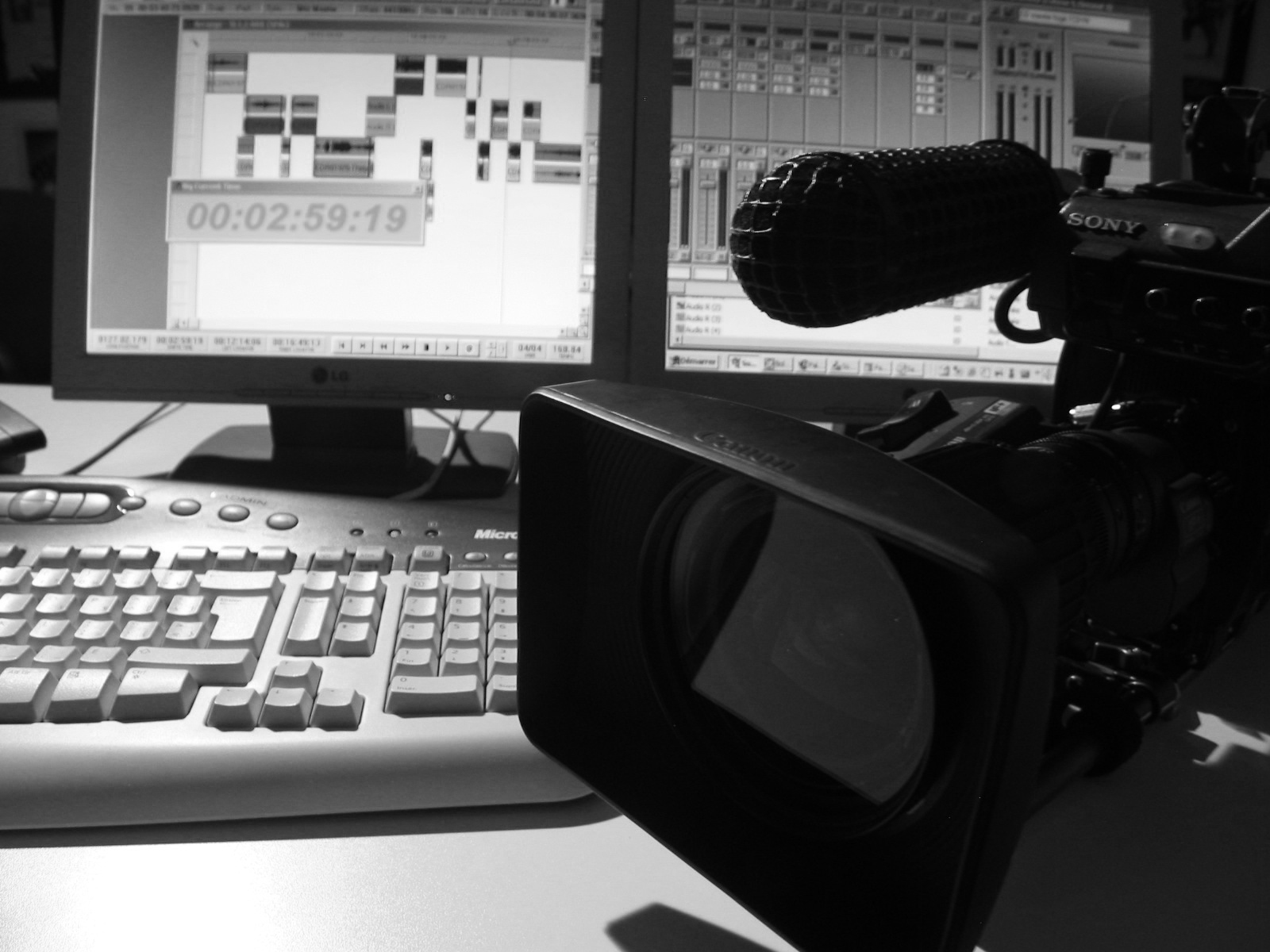
He continues, “I learned to cut music using an analogue system with 4 tracks and today, I work with 16 tracks on 3 screens and all is digital.”

Hugo describes himself as self-taught, holding a degree in Industrial Design, which he says “helps me a lot in the creative and artistic process. I asked lots of questions, I made lots of mistakes, and I always want to keep improving.”

Hugo’s technical capabilities are complemented by his familiarity with skating. He competed in ice dance from 1979 to 1995, with a fourth place finish at Junior Worlds in 1993, with partner Elizabeth Hollett, and a sixth place at the Canadian Senior nationals, while skating with Martine Michaud in 1995.

Having coached and choreographed for both ice dance and synchro, Hugo adds, “For each mix, I can’t help but imagine choreography in my head”

Moreover, Hugo continuously works to expand his musical vocabulary, saying, “In my spare time I see shows, watch films and travel as much as possible, and I bring home a few CDs from everywhere. Australia, Morocco, Europe. I always keep an attentive ear open, wherever I am because often, when I least expect it, I find musical treasures. I listen and I buy lots of music because I hate constantly working with the same pieces. It’s like always eating the same things! I feel I have introduced new sounds to my clients and have changed the audio landscape that one is used to hearing at arenas.”

“I enjoy everything I listen to for work,” he says. “I listen to lots of instrumental music of all sorts. I love discovering new artists and new sounds.”

His passion for skating and for music extends beyond his job, though. Hugo explains, “Skating is a powerful means to introduce music to young people. It forces them to put aside the radio or television, to discover and experiment with other styles. I hope the ISU never allows vocal music for singles and pairs skaters, because we would lose an enormous piece of our cultural heritage. There is so much music available that one can easily be original…you just have to look a bit!”

And, it can’t hurt that, as Hugo says, “I love my job!”

Getting Started

It was Hugo’s coach who first got him started in editing music for others. Hugo recalls, “My coach at the time found that I had a good musical sense and I had an interest in audio gadgets. She suggested that I do the music for all her students.”

So, Hugo “borrowed $4000 from my parents and I began quietly to work for skaters in my ‘studio’ (which was in fact my room at my parents’ house).” His client base subsequently grew by word of mouth.

Most of his first clients were local skaters but, he adds “shortly after I began, Jean-Marc Généreux of So You Think You Can Dance, who was my ballroom dance coach, entrusted me for his own show. At the same time I began to work with Joannie Rochette when she reached Pre-Novice in 1997.

This year, 23 athletes skated to Hugo’s musical designs at the Olympics, of which three gained medals. These days, says Hugo, “The Internet makes international collaborations very easy.” His roster includes clients from North America, Europe, South Africa, Asia and Australia.

Other Services

In addition to designing music for skating programs, Studios Unisons also cuts music for other sports, including fitness, gymnastics and synchronized swimming, where his clients include the British team and duo of Jenna Randall and Olivia Allison. Hugo also did work for Thin Ice on the remake of Ice Castles, and offers a few related services.

Says Hugo, “When I am not super-busy, I try to play around with pop music – even though it’s not my favorite style, I am responsible for creating play lists for events, including the Canadian Championships and the Skate Canada leg of the Grand Prix Series. I put together music for warm-ups and the scoring intervals between skaters. It’s important to make the athletes comfortable, because that influences their level of energy and, in consequence, their performances.”

He also works with three coders who create custom software and tools for his sk8mix.com website. Their latest Sk8mix Event Player allows competition organizers to play CDs, as on a regular CD player, but without the associated pitfalls. “I find it unacceptable that certain regional competitions do not have the equipment necessary to correctly play music. It’s terrible for the athlete to have to interrupt their program because of a technical problem,” says Hugo.

What’s Next?

According to Hugo, he currently has “several projects in progress. In fact, I am doing as much work now for beginners as for the world elite. I actually have nearly 300 files open and two administrators are helping me handle it all. I do about 2,000 mixes per year. I have projects currently going for Kiira Korpi, the U.S. Pairs champions Caydee Denney and Jeremy Barrett, Caroline Zhang, Adam Rippon, Brian Joubert, and Kaitlyn Weaver and Andrew Poje. I have just finished a short program for Stacey Kemp and David King and there are new ones added every week. It’s a very exciting and intense time!”

British Pairs skater David King said, “This is our third season working with Hugo and we are still amazed by his knowledge, skill and speed of getting you the end product. He is very reliable and a great person to work with. You have to skate to your music every day for at least a season – it has to sound good and be perfect. Hugo’s music always does.”

Hugo concludes, “The important thing is to keep persevering and to have a passion for what you do. I adore this Michelle Kwan quote, ‘In most pursuits, you can’t look up on the scoreboard and know precisely where you stand. And so most of the time, in your lives and careers, you’ll be the one scoring yourself. Let the standard be high.’ ”

More information on Hugo Chouinard and Studios Unisons can be found at www.StudiosUnisons.com

The complete text of Hugo’s responses in the original French can be found at www.iskatemagazine.com
The making of an Olympic
gold medal winning program

According to skating music designer, Hugo Chouinard, “Putting together music, it’s a bit like creating a small Hollywood-style film. There is a story to be told in a limited time and it must have suspense, a dramatic climax, a triggering factor, quiet moments, action and a denouement. The spectator must never be bored, nor above all be distracted by a mistake in the music editing. In order for the emotion to be conveyed, the music and performance must be a perfect match/in perfect alignment.”


Yu-Na Kim’s James Bond-themed program, a collaboration between Hugo and Canadian choreographer David Wilson, is exemplary of this philosophy.

Says Hugo, “In the case of Yu-Na’s short program, David asked for the music from James Bond movies. It was a very interesting and unusual theme especially for an Olympic year…but it can also be very tacky! I know Yu-Na’s style well because I have worked for her since 2006 and I knew that she needed a version with character and charisma, above all…something that had never been heard.”

David explains, “The ‘Bond girl’ piece is probably a perfect example of how fantastic he is. When the idea came about, I called him and asked him to find me everything known to man that’s been created that’s instrumental Bond.”


Specifically, David notes, “We didn’t want to sit back and listen to the James Bond theme for three minutes.”


“After two days of research,” says Hugo, “I found a wonderful double album by the City of Prague Philharmonic, with enormous potential for choreography, which I sent to David for feedback.”


Says David, “There were 3-4 tracks from every Bond film. Some of them were instrumental arrangements on the particular theme of that particular Bond movie, others were arrangements taken from soundtrack music. There were lots of delicious ins and outs.”


“On his flight back from the PSA conference in Orlando,” Hugo continues, “David listened to the 59 pieces and sent me a list of his preferred sections.”

Hugo began his musical design on 25th May 2009: “I isolated his 29 favorite parts to obtain 10 minutes of music bits extracted from 10 pieces. I began by creating the transitions between sections to create a Version 1, that was about 5 minutes long. This was an intensive process of brainstorming and experimentation. We tried to create interesting combinations; I arranged the transitions and we discussed it. I literally invented the bridges connecting the parts. We went back and forth with the versions, until we were both convinced and satisfied.”


By the next day, they were working on Version 8. “We completely changed the introduction to accentuate the suspense,” says Hugo. “At that point, we had 3:07 of music. We were getting truly excited about the results.”


“With the IJS, strategic placement of the elements is now essential and the music must take into account the elements,” notes Hugo. “Yu-Na’s James Bond was particularly well planned. Listening to the music again, you can see that in the music used for the spiral and footwork sequences. That is not by accident! So, especially for world-class skaters, we plan the music taking into account the placement of the elements and the choreographer’s plan.”


Another 14 hours later, Version 9 was down to 2:50 and ready to test on the ice. “I continued to tweak minor details until 23rd September,” he continues, “By then, the elements coincided completely precisely with the music.”


For the final edit, five musical pieces were used. Thirteen versions were created and about 40 transitions were required. Yu-Na first presented the program in October 2009 at the Trophée Eric Bompard, winning the segment by 16.44 points. The program went on to set a new ISU world record for the short program at the Olympics with a total segment score of 78.50.

The Man Behind the Music
by Susan D. Russell

He may not be a household name, but there are likely countless skating fans around the world that have hummed many of the musical creations Hugo Chouinard has produced for hundreds of skaters over the years.

This season, more than 50 singles skaters and teams from all corners of the globe are performing to Chouinard’s musical compilations. His client list for the Olympic season includes Yu-Na Kim, Johnny Weir, Joannie Rochette, Tomas Verner, Takahiko Kozuka, Yukari Nakano, Qing Pang and Jian Tong, and Dan Zhang and Hao Zhang.

Chouinard and choreographer David Wilson have collaborated on the musical creations for Kim’s programs the past three years, but her short program this season ranks as one of Chouinard’s all-time favorites. « David and I wanted to create a completely different concept for Yu-Na this year, » Chouinard said. « David called me and said, ‘Sandra (Bezic) has a vision. How about a mysterious Bond girl? Send me all your greatest Bond tracks.’ »

« I asked myself how I would create a Bond program for a girl because it could so easily sound cheesy and overdone. But I discovered a fully orchestrated album of Bond tunes with mysterious-sounding sections that was amazing. David liked it right away. The blending of the five Bond pieces has a subtle balance of mystery and romance. »

Finding the right music for Weir’s new programs was another adventure. « David sent me a vague e-mail describing the ‘Fallen Angel’ concept, » Chouinard said. « He wanted thunder and lightning, church bells and an organ, something dark and foreboding with haunting violin and strings. I love that kind of challenge. »

The final product exceeded everyone’s expectations. « Johnny fell in love with it. When I was structuring the music, I imagined Johnny’s movements and the atmosphere in the arena, » Chouinard said.

A former singles and ice dance competitor at the national level, Chouinard plays piano, violin and tenor saxophone. He credited his parents with instilling a love of music in him.

The Montreal native acquired his first small music mixer with two turntables at age 13. Chouinard recalled Wilson helping him edit his first skating program on a tape deck using the play and pause technique.

« I met Hugo when he was 10. You would open his bedroom door and alarms would go off, » Wilson recalled with a laugh. « He has always been a techie. »

When Chouinard’s former ice dance choreographer suggested he purchase the equipment necessary to make good quality sound programs for her skaters, the music maestro was motivated. He borrowed $4,000 from his parents, bought a new system and set up a studio in his family’s home. « My clients sat on my bed while I created their music, » the 35-year-old said.

In 2004, Chouinard produced the music for Jeffrey Buttle’s ‘Naqoyqatsi’ free program. « Jeffrey won his first national title that year, and it was the starting point of a new and wonderful era for me, » Chouinard said.

Chouinard also produces musical gems for two of Canada’s top synchronized skating teams, Black Ice and Les Suprêmes.

But his creativity is not limited to the ice. His résumé includes Olympic synchronized swimmers and world champion ballroom dancers.

He has worked with ‘So You Think You Can Dance Canada’ judge Jean-Marc Généreux since 1998. Généreux was Chouinard’s ballroom teacher during his ice dance career, but when the music guru opened his studio, Généreux and his wife France became Chouinard’s clients. « If you think it is musically impossible… ask Hugo! » Généreux said.

Wilson was the best man at Chouinard’s wedding and is the godfather of his 1-year-old son, Olivier.

 « Hugo is a major part of my career. I don’t know what I would do without him, » Wilson said. « At times I will be at my wits’ end, and I will send him a vague idea and he will find a way to make it work. Even with the simplest of projects, he will make it better than you ever thought it could be. »

SUSAN D. RUSSELL

The man who feels the music
by Vladislav Luchianov

Our today’s article is about Hugo Chouinard, great musical designer for Figure Skating. He is former ice dancer and a member of the Canadian National Team. Now he makes us happy with their brilliant musical works. Hugo is a founder of Studio Unisons since 1993. This studio has a great reputable name in the figure skating world.

His skating clients are Yuna Kim, Joannie Rochette, Akiko Suzuki, Johnny Weir, Jeremy Abbott, Takahiko Kozuka, Isabelle Delobel & Olivier Schoenfelder, Pang&Tong, Zhang & Zhang, Dube & Davison, Duhamel & Buntin and many more. So he is really musical designer for the Champions. Music it’s a very important part of the figure skating and Hugo knows it. That’s why his works are full of passion, harmony, beauty.

Just look what says about his job over professionals: Brian Orser : “I have a great music guy!”, David Wilson: “Music editing is crucial”. Hugo also design a simple software for skating event needs. He creates it to avoid all the skipping problems in competition and to help the Competition Comittee. He do it because skaters deserve good music and no technical problems while they are performing. And he do it perfectly!